- Bathing
- Indoor / Outdoor
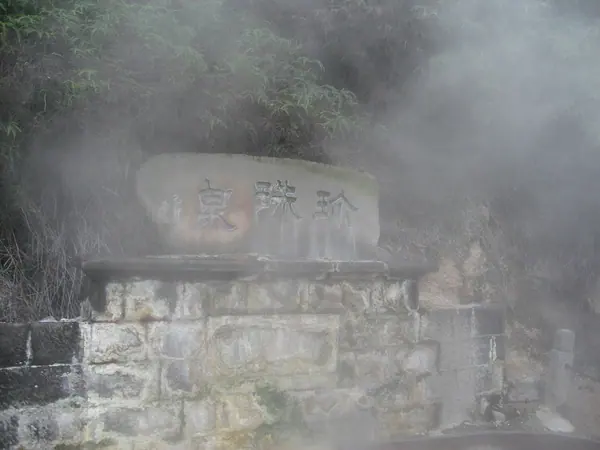
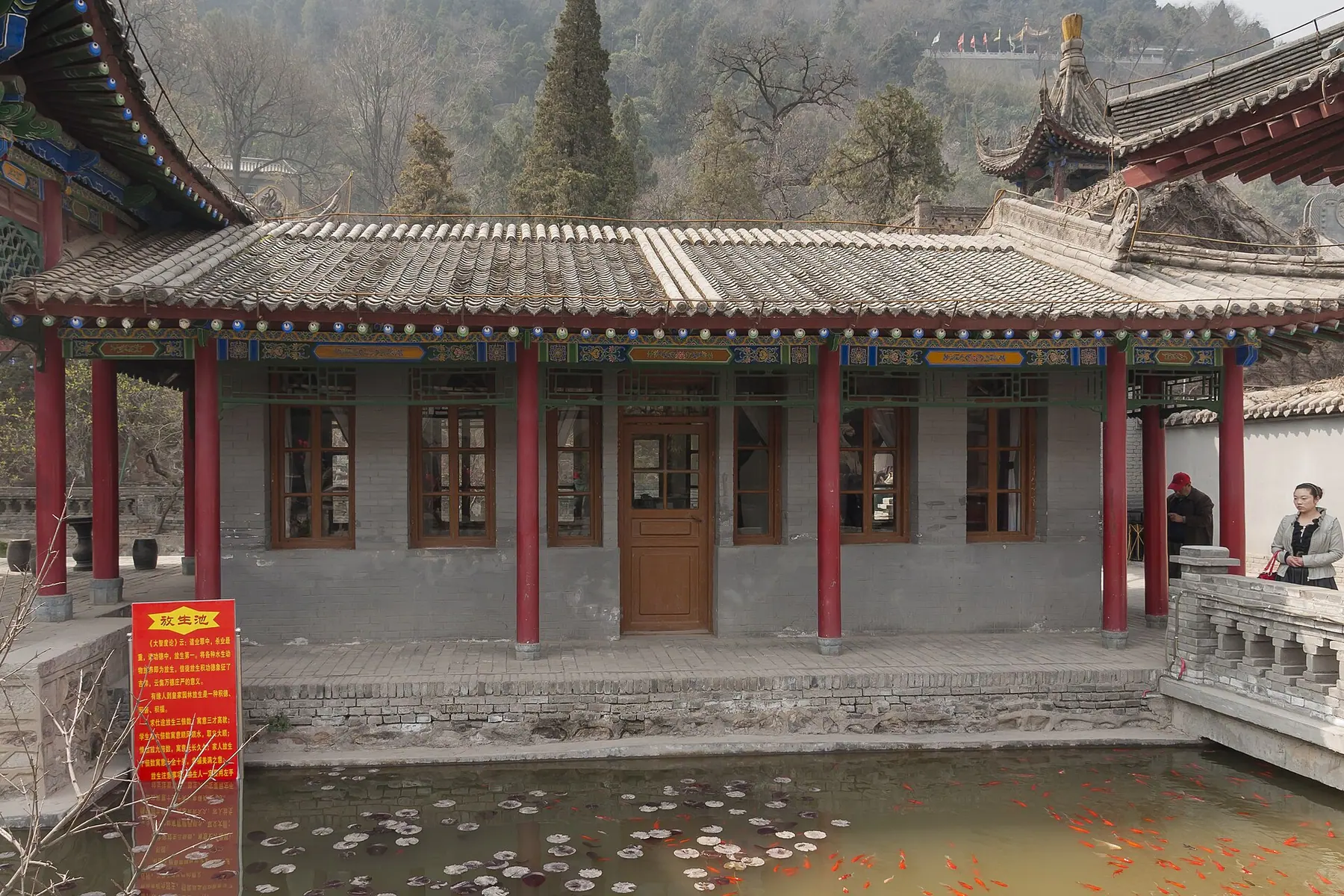
Huaqing Palace lies against the wooded slope of Mount Li outside Xi'an, where warm spring water has been drawn into imperial pools for two millennia. Excavated Tang-dynasty basins — among them the lotus-shaped pool built for Emperor Xuanzong and the Guifei Pool associated with his consort Yang Yuhuan — sit within a landscaped complex of halls, ponds and pavilions, with modern bathhouses alongside.
Balnevia view
Why visit
This is the most storied bathing site in China: the archaeological pools of the Tang court are open to view, and the mineral water still supplies baths on the same ground.
The water
Thermal water
- Source
- Mount Li springs
- Mineralisation
- Mineral water containing calcium, sodium and trace elements
- Character
- Warm spring water from the base of Mount Li, drawn into pools on this site since antiquity.
History
Rulers built retreats here from the Western Zhou onward, and the Tang emperor Xuanzong greatly expanded the complex in the eighth century, renaming it Huaqing Palace. The Tang pools were lost for centuries and rediscovered by excavation in 1982; the site was also where Chiang Kai-shek was seized during the 1936 Xi'an Incident, and his lodging is preserved on the hillside.
Practical information
A ticketed heritage site, best combined with the Terracotta Army a few kilometres away. Bathing takes place in the modern spa buildings, not in the excavated Tang pools.
- Things to do nearby
- Explore nearby activities on GetYourGuide
Getting there
About 30 km east of Xi'an in Lintong, reachable by tourist bus or a short high-speed rail hop to Lintong.
Location
Recommendations
Hotels nearby
Explore places to stay near Huaqing Palace Hot Springs.
Related places