- Bathing
- Indoor / Outdoor
- Accommodation
- Hotel on site
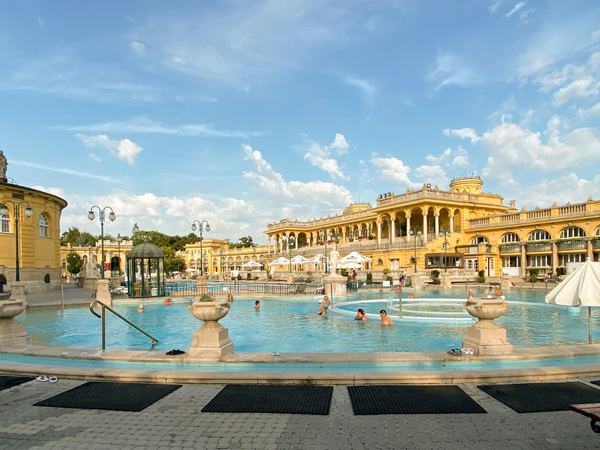
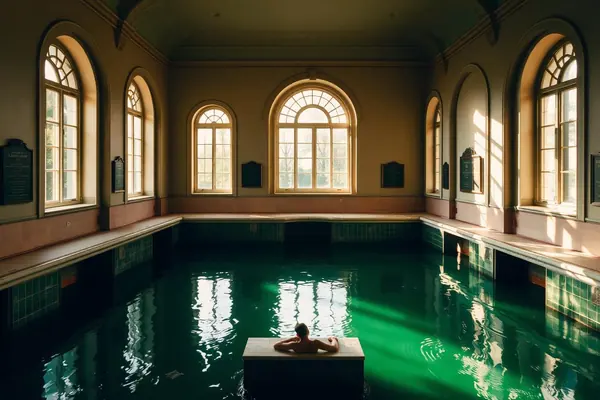
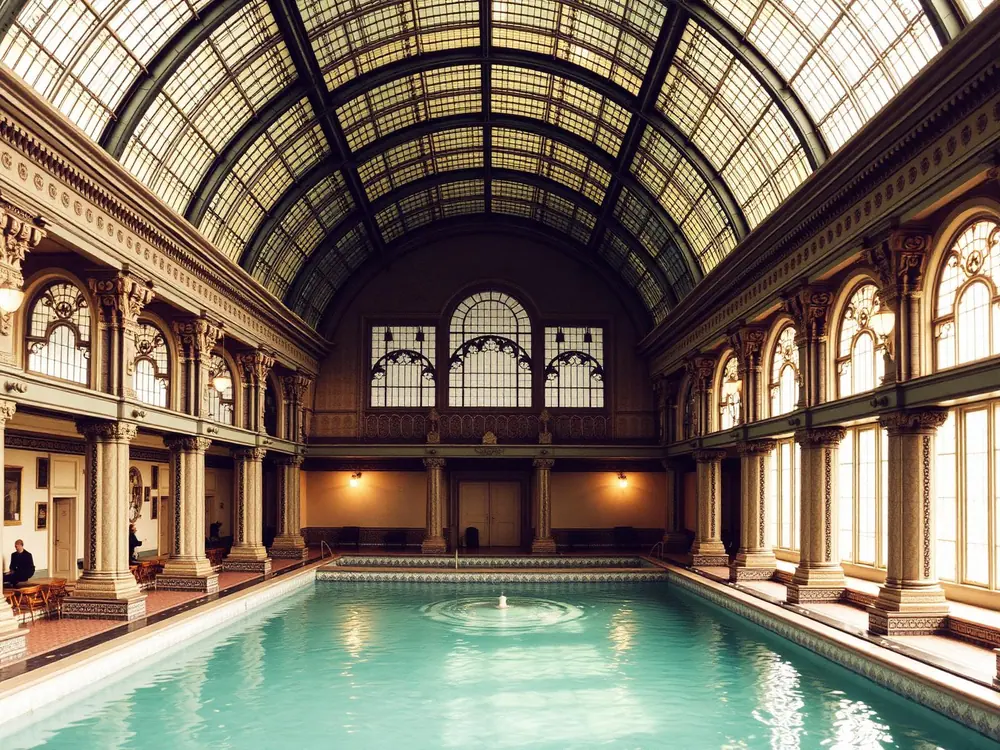
Built into the flank of Gellért Hill between 1912 and 1918, the Gellért is the most complete surviving Art Nouveau bath in Europe: Zsolnay ceramics, stained glass and a barrel-vaulted swimming hall that opens to the sky in summer.
Balnevia view
Why visit
For the architecture as much as the water. The main hall is a piece of Hungarian Secession design that still works exactly as intended, and the calcium-magnesium water below it has been used since the Middle Ages.
The water
Thermal water
- Source
- Gellért Hill springs
- Mineralisation
- Calcium-magnesium-hydrogen carbonate, sulphate, chloride
- Character
- Mineral-rich water traditionally used for joint and circulatory complaints
Facilities
- Thermal pools
- Outdoor pools
- Indoor pools
- Sauna
- Massage treatments
- Café
History
Ottoman-era bathers used springs on this site from the 13th century; the present palace-and-bath complex opened in 1918 and was rebuilt after both world wars.
Practical information
Open daily; bring a towel and flip-flops or rent them. Cabins are worth the small supplement at weekends.
- Things to do nearby
- Explore nearby activities on GetYourGuide
Getting there
Tram 47 or 49 to Szent Gellért tér, or Metro M4 to the same square, directly outside the entrance.
Location
Recommendations
Gellért Bath skip-the-line entry
Full-day ticket with cabin
Timed entry to the thermal pools, swimming hall and saunas, with a private changing cabin.
Danubius Hotel Gellért
Attached to the baths
Historic hotel sharing the building, with direct access to the thermal wing.
Danube evening cruise
From Pest, 70 minutes
Pair an afternoon bath with the city seen from the water after dark.
Hotels nearby
Explore places to stay near Gellért Thermal Bath.
Related places