- Baño
- Interior / Exterior
- Alojamiento
- Hotel en el recinto
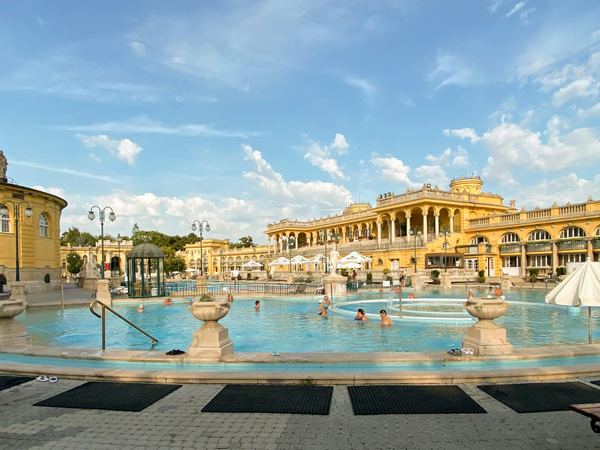
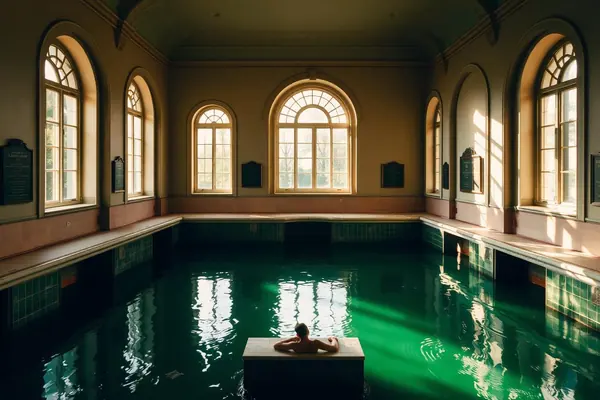
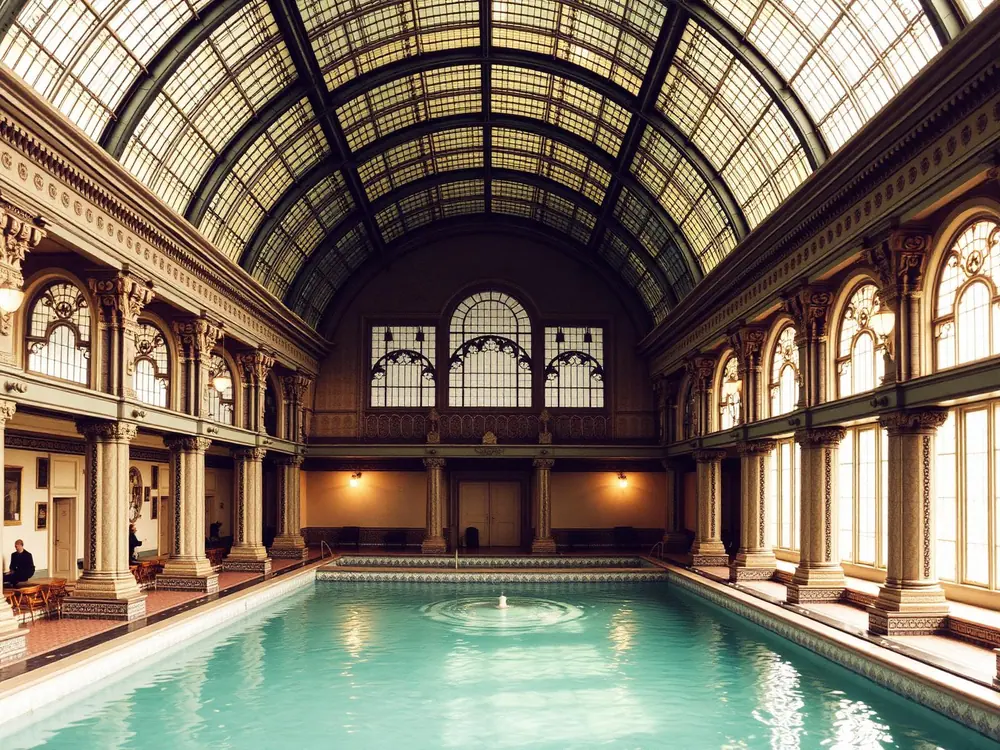
Construidos en la ladera de la colina Gellért entre 1912 y 1918, los Gellért son el balneario modernista más completo que se conserva en Europa: cerámicas Zsolnay, vidrieras y una sala de piscinas con bóveda de cañón que se abre al cielo en verano.
Mirada Balnevia
Por qué visitarlo
Por la arquitectura tanto como por el agua. La sala principal es una obra del diseño modernista húngaro que sigue funcionando exactamente como se concibió, y el agua cálcico-magnésica que la alimenta se ha utilizado desde la Edad Media.
El agua
Agua termal
- Manantial
- Manantiales de la colina Gellért
- Mineralización
- Carbonato de calcio, magnesio e hidrógeno, sulfato, cloruro
- Carácter
- Agua mineralizada tradicionalmente utilizada para afecciones articulares y circulatorias
Instalaciones
- Thermal pools
- Outdoor pools
- Indoor pools
- Sauna
- Massage treatments
- Café
Historia
Los bañistas de la época otomana usaban manantiales en este lugar desde el siglo XIII; el actual complejo palaciego y de baños se inauguró en 1918 y fue reconstruido tras ambas guerras mundiales.
Información práctica
Abierto todos los días; lleve toalla y chanclas o alquílelas allí. Las cabinas merecen la pequeña tarifa adicional los fines de semana.
- Actividades cercanas
- Explorar actividades cercanas en GetYourGuide
Cómo llegar
Tranvía 47 o 49 hasta Szent Gellért tér, o metro M4 hasta la misma plaza, justo frente a la entrada.
Ubicación
Recomendaciones
Gellért Bath skip-the-line entry
Full-day ticket with cabin
Timed entry to the thermal pools, swimming hall and saunas, with a private changing cabin.
Danubius Hotel Gellért
Attached to the baths
Historic hotel sharing the building, with direct access to the thermal wing.
Danube evening cruise
From Pest, 70 minutes
Pair an afternoon bath with the city seen from the water after dark.
Hotels nearby
Descubre dónde alojarse cerca de Baños Termales Gellért.
Lugares relacionados