- Baden
- Innen / Außen
- Unterkunft
- Hotel vor Ort
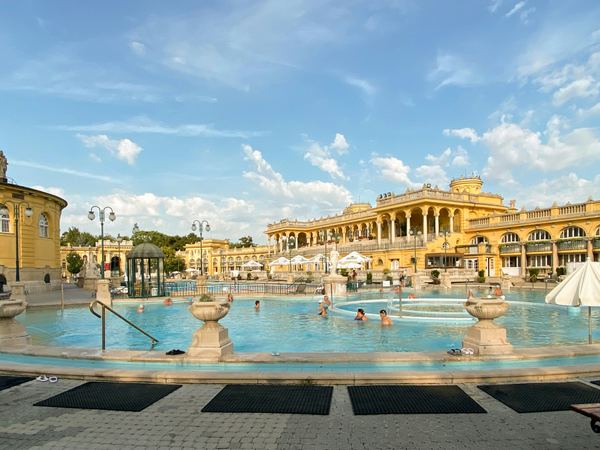
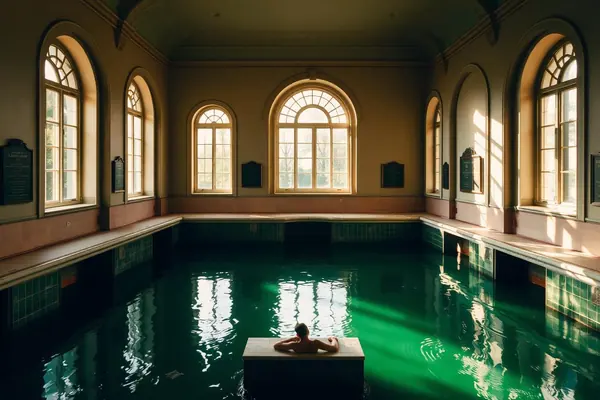
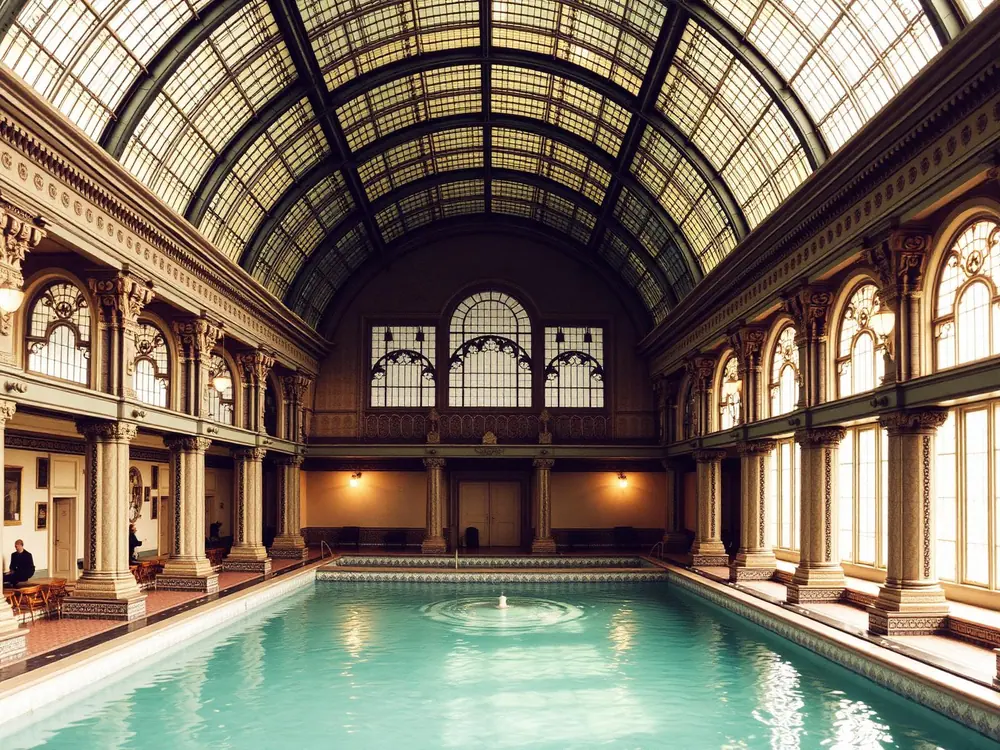
Zwischen 1912 und 1918 in den Hang des Gellértbergs gebaut, ist die Gellért-Therme das vollständigste erhaltene Jugendstilbad Europas: Zsolnay-Keramik, Buntglasfenster und eine tonnengewölbte Schwimmhalle, die im Sommer zum Himmel geöffnet ist.
Balnevia-Sicht
Warum hingehen
Sowohl wegen der Architektur als auch wegen des Wassers. Die Haupthalle ist ein Meisterwerk ungarischer Secessionskunst, das noch immer genau so funktioniert wie geplant, und das Calcium-Magnesium-Wasser darunter wird seit dem Mittelalter genutzt.
Das Wasser
Thermalwasser
- Quelle
- Gellértberg-Quellen
- Mineralisierung
- Calcium-Magnesium-Hydrogencarbonat, Sulfat, Chlorid
- Charakter
- Mineralreiches Wasser, traditionell bei Gelenk- und Kreislaufbeschwerden verwendet
Einrichtungen
- Thermal pools
- Outdoor pools
- Indoor pools
- Sauna
- Massage treatments
- Café
Geschichte
Bereits im 13. Jahrhundert nutzten Badegäste aus der Osmanenzeit die Quellen an diesem Ort; der heutige Palast- und Badekomplex wurde 1918 eröffnet und nach beiden Weltkriegen wieder aufgebaut.
Praktische Informationen
Täglich geöffnet; Handtuch und Badeschlappen mitbringen oder vor Ort mieten. Kabinen lohnen sich besonders am Wochenende gegen kleinen Aufpreis.
- Aktivitäten in der Nähe
- Aktivitäten in der Nähe auf GetYourGuide entdecken
Anreise
Straßenbahn 47 oder 49 bis Szent Gellért tér oder Metro M4 zum selben Platz, direkt vor dem Eingang.
Lage
Empfehlungen
Gellért Bath skip-the-line entry
Full-day ticket with cabin
Timed entry to the thermal pools, swimming hall and saunas, with a private changing cabin.
Danubius Hotel Gellért
Attached to the baths
Historic hotel sharing the building, with direct access to the thermal wing.
Danube evening cruise
From Pest, 70 minutes
Pair an afternoon bath with the city seen from the water after dark.
Hotels nearby
Entdecken Sie Unterkünfte in der Nähe von Gellért-Therme.
Verwandte Orte